PRODUCT DESIGNER
I help companies to make their user's interaction experience fun and enjoyable while at the same time increase their ROI by implementing significant UX improvements.
I always strive for simple aesthetic solutions and usability. I love finding creative solutions, based on the outcome of in-depth research and data analysis.
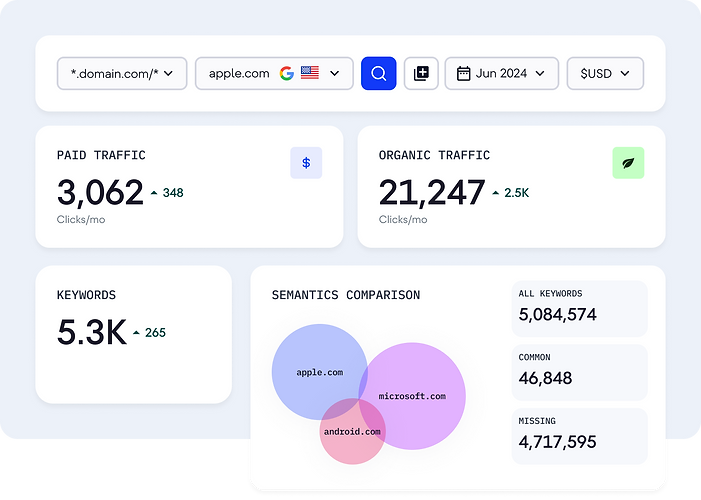
Improving Trial-to-Paid Conversion & MRR at SE Ranking
Overview
SE Ranking wanted to increase revenue from new users by improving trial-to-paid conversion and MRR. As Growth Lead, I led research, design, and A/B test coordination to redesign the pricing and upgrade experience during trial.
Problem
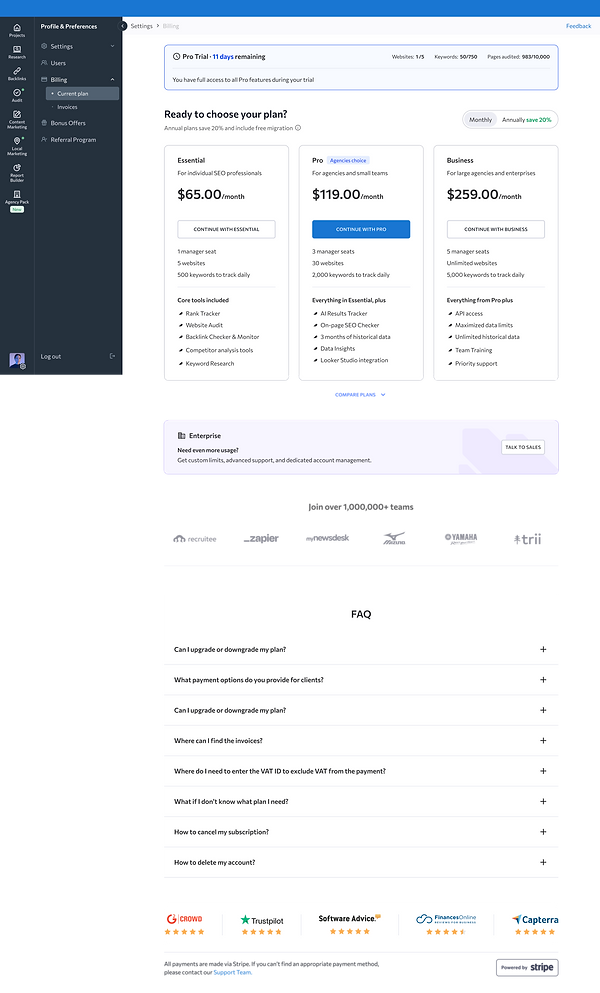
The existing trial flow introduced pricing choices, keyword upgrades, and add-ons too early, creating friction before users experienced the product’s core value.
What I did
I tested two pricing strategies:
-
an early upsell flow designed to increase add-on purchases
-
a simplified no-upsell flow focused on reducing friction and keeping users focused on value
My role
Growth Lead (embedded in cross-functional squad: PM, 5 Engineers, 1 Designer, 1 Data Analyst)
I led research, design, and A/B test coordination
North-star
Raise Monthly Recurring Revenue (MRR) from new users without hurting retention.
Key metric targets
+15% MRR
+10 ppt conversion lift
Impact
-
Early upsell test: +8% Pro plan buying, but -5% trial conversion and -3% total MRR
-
Final no-upsell flow: +20% trial-to-paid conversion and +10% total MRR
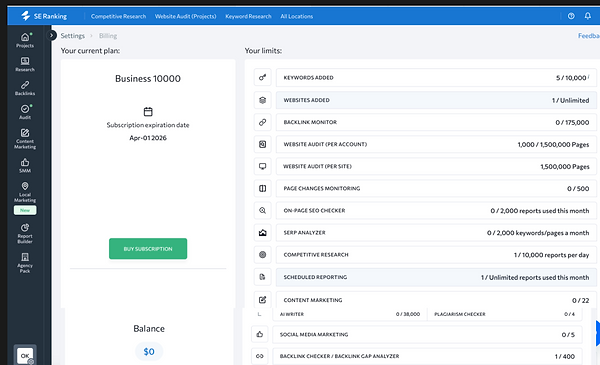
Billing page (before)
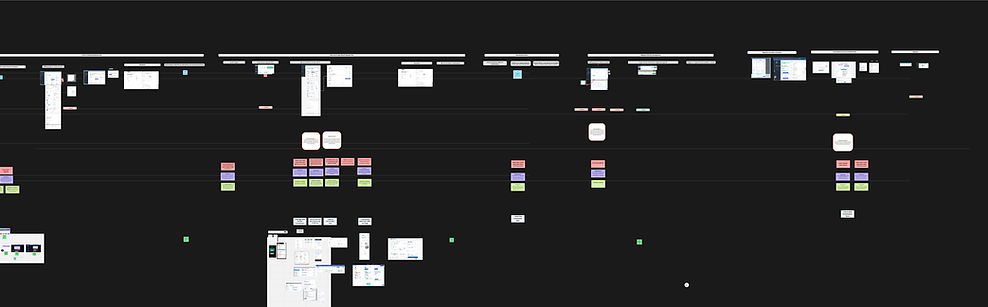
User Journey Map Analysis
.jpg)
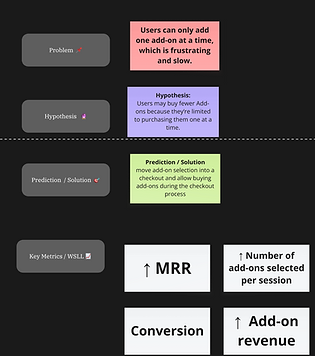
Hypothesis #1
We believe that trial users don’t realize they can tailor plans with keyword upgrades or add-on packs, so if we surface add-on options during checkout, they’ll attach more add-ons and that will lift overall MMR.
Prediction
If we introduce add-on upsells in the trial checkout flow, it can increase add-on attach-rate and total MMR.
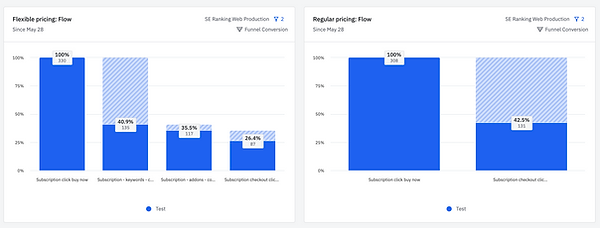
Result: A/B test showed a small bump in add-on purchases, but overall trial conversion fell by 5% and total MMR dropped by 3%—hypothesis invalidated.
Big idea: Offer maximum flexibility to our customers.
A/B test
-
We built a pricing wizard that guides users through options
-
Pick additional keywords and user seats on one step
-
Pick your add-ons on the other step
-
Different plans show relevant pricing for keywords and add-ons
Metrics
-
conversion rates
-
varage MRR
-
ARPA
-
healthy revenue metrics
Prototype
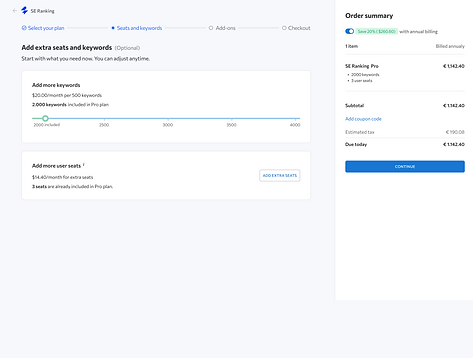
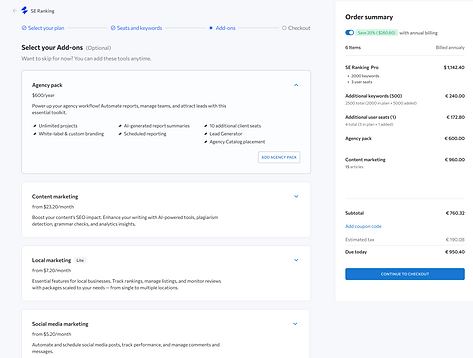
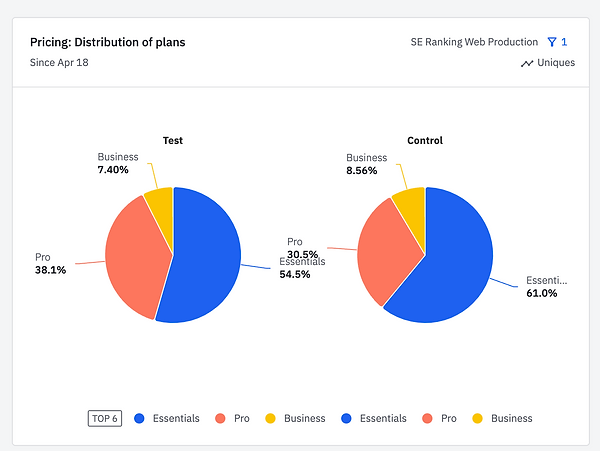
Increased Pro plan buying by 8%
A/B test showed a small bump in add-on purchases, but overall trial conversion fell by 5% and total MMR dropped by 3%. hypothesis invalidated.
Learnings
Choice overload hurts primary goals.
Presenting multiple up-sell plans in one flow confused many trial users.
Result
Hypothesis #2
We believe trial users defer add-on purchases until after they’ve committed, and that prompting add-ons during trial actually distracts from core value.
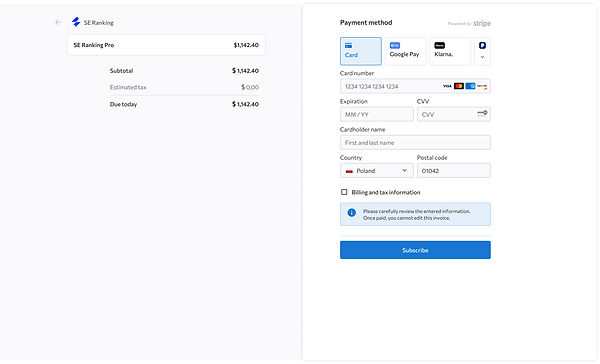
Big idea: Let trial users dive straight into our core product—remove all add-on and seat-upgrade prompts so they stay focused on value first, then tailor later.
A/B test
Prediction
If we remove all add-on and seat-upgrade prompts from the trial experience, we’ll reduce friction and drive a higher trial-to-paid conversion (and ultimately net more MMR).
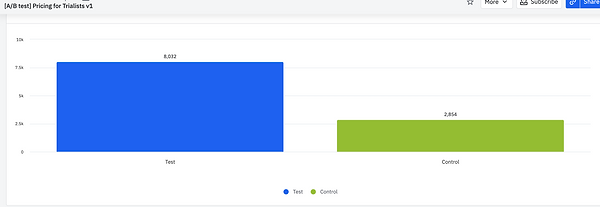
Result: After rolling out the “no-upsell” trial flow, trial-to-paid conversion improved by 20% and total MMR increased by 10%.
Metrics
-
Trial-to-paid conversion rate (%)
-
Total new MRR ($)
-
Average revenue per account (ARPA)
-
Time to first payment (days)
-
Post-conversion add-on attach rate (%)
-
Customer satisfaction (CSAT/NPS) during trial finish
Prototype
Result
After rolling out the “no-upsell” trial flow, trial-to-paid conversion improved by 20% and total MMR increased by 10%.
Learnings
Removing the upsell at signup proved that users will convert once they’ve experienced core value
next, re-introduce add-ons contextually
Personalize at scale.
In future tests I’ll segment users by company size / usage patterns and tailor both pricing and copy for maximum relevance.